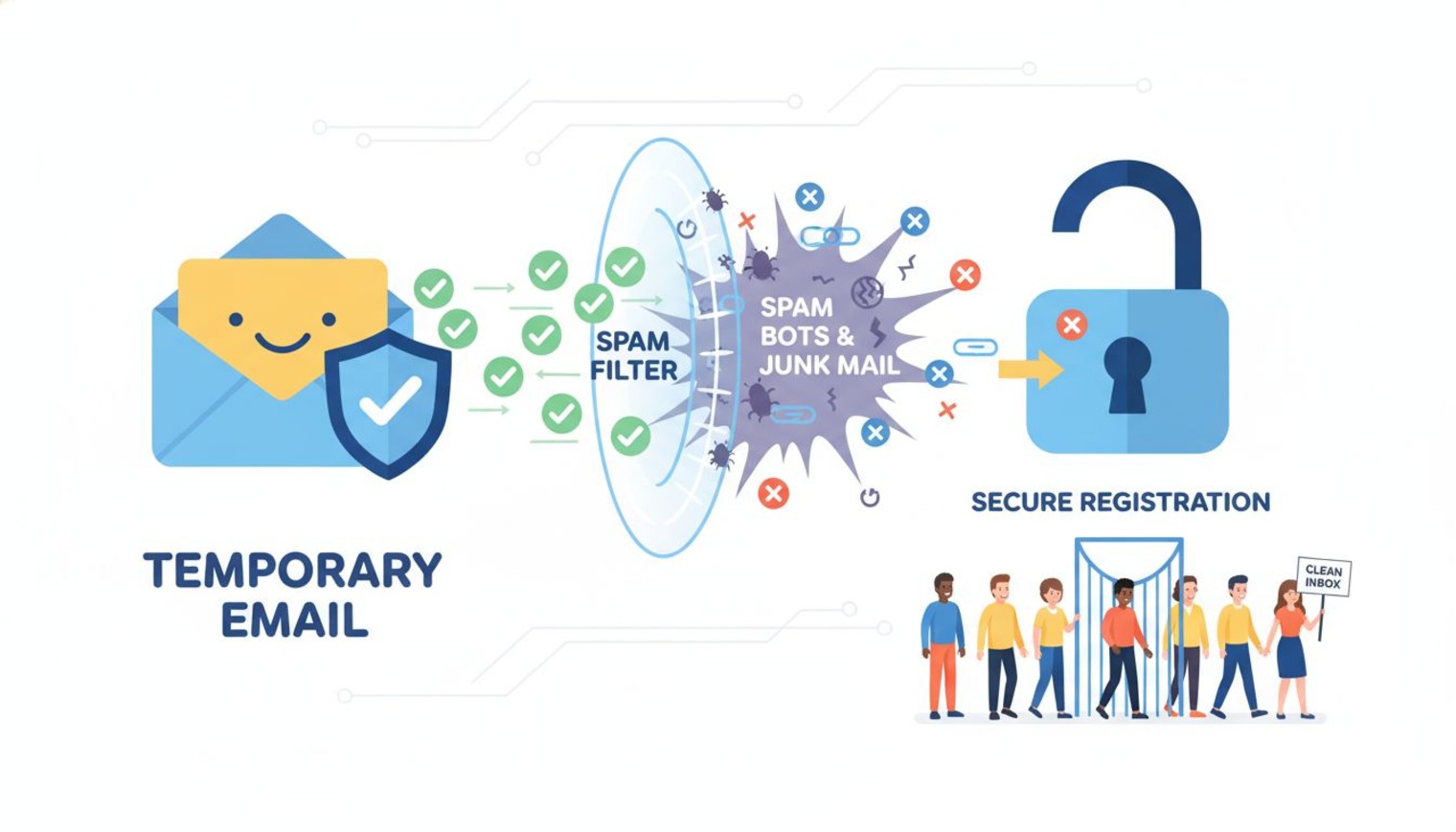

I did not start using temporary email because of one dramatic spam disaster. I started because my day-to-day workflow became annoying. I test tools, sign up for product betas, and review onboarding flows. After a few months, my main inbox became a noisy mix of receipts, trial reminders, and aggressive win-back campaigns I never asked for.
The turning point was simple: one Monday morning, I searched for a client invoice and had to scroll through 47 low-value emails from signups I barely remembered. That was enough. I rebuilt my signup habit around temporary inboxes and a stricter address policy.
The 3-layer email setup that finally worked
I now use a layered setup instead of one address for everything:
- Core inbox: banking, legal, clients, and long-term accounts.
- Secondary inbox: shopping, newsletters I actually read, and communities I trust.
- Temporary inbox: one-off trials, gated downloads, event registration pages, and QA tests.
This one decision removed most of the noise from my core inbox in about three weeks.
My real workflow for one-off signups
When I want to try a new app, I open TempMail first instead of the app signup form. Then I follow this sequence:
- Generate a temporary address.
- Use it for signup and wait for verification mail.
- Finish onboarding and test core features immediately.
- If the tool is worth keeping, migrate to my secondary inbox later.
Most tools do not deserve a permanent address on day one. A temporary mailbox gives me a clean evaluation window before commitment.
One failure case (and what I changed)
Not every site accepts temporary domains. I hit this on a finance-related service that blocked the address at submit time. Instead of forcing it, I switched to my secondary inbox and tagged that sender as “high-promo risk.”
The rule I now follow: if a platform handles money, legal records, or long-term access recovery, I use a permanent inbox from the start. Temporary addresses are for low-risk evaluation, not for critical identity.
What changed after 30 days
The difference was measurable:
- My daily inbox triage time dropped from about 25 minutes to under 10.
- Promotional clutter in my core inbox fell by roughly 80%.
- I became more deliberate about which products earned a real contact address.
I also found it easier to audit old signups. If a trial was dead, I did not need to unsubscribe from six different sequences. The temporary inbox simply expired.
Rules I follow so this stays useful
- Never use temporary inboxes for banking, tax, legal, or client-critical systems.
- Keep one temporary inbox per trial to preserve clean attribution.
- Promote good tools to a secondary inbox only after real value is proven.
- Use a strong password workflow for every account I keep long-term.
Final takeaway
Temporary email did not solve every inbox problem, but it fixed the biggest one: low-value signup noise stealing attention from important messages. If your inbox is crowded by trial activity, start with a layered address policy and a temporary workflow. It is a small habit change with an outsized result.
If you want another angle, read Who Uses Disposable Email and Why It Matters and Optimizing Campaign Deliverability.